


Insider Brief
- University of Utah researchers developed an AI technique based on quantum mechanics that can identify predictors of patient outcomes and potential drug targets from small clinical datasets containing millions to billions of molecular features.
- The study, published in APL Quantum and funded by the NIH, NSF and several cancer research organizations, found two previously unknown predictors of neuroblastoma treatment response and survival that outperformed existing biomarkers across tumor and blood datasets.
- Researchers said the approach could help improve treatment selection, identify new drug targets and support clinical trial design, with potential applications extending beyond cancer research to other diseases and data-intensive fields such as sustainable energy.
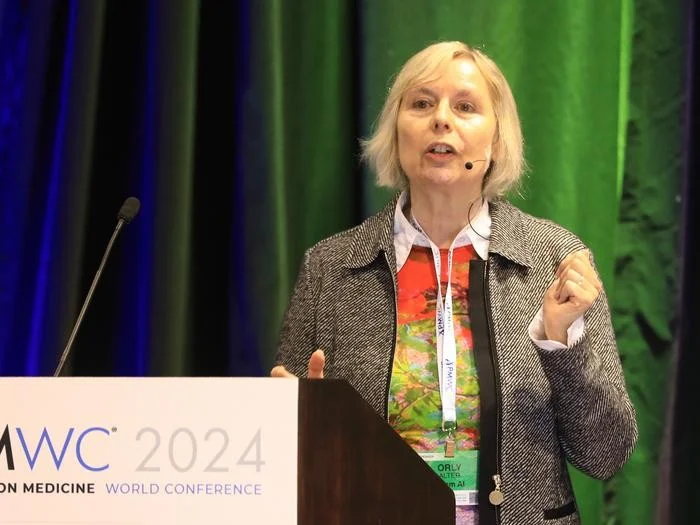
University of Utah researchers have developed an artificial intelligence technique that uses mathematical concepts from quantum mechanics to identify predictors of patient outcomes and potential drug targets from relatively small clinical datasets. The work, published June 10 in APL Quantum, was funded by the National Institutes of Health, National Science Foundation and several cancer research organizations.
According to the University of Utah, the new approach can analyze millions to billions of molecular features from a patient’s tumor and blood samples while requiring far fewer patient records than conventional AI systems. While focused on neuroblastoma, the most common cancer in infants, researchers believe the method could eventually be applied to a wide range of diseases and even fields outside medicine.
The effort was led by Orly Alter, associate professor of biomedical engineering at the University of Utah’s Scientific Computing and Imaging Institute, along with collaborators from Tufts University, Scale AI, Children’s Hospital of Los Angeles and the University of Southern California.
“It’s much more than just one gene — everything that’s happening in the cells of the patient matters,” Alter said.
Addressing a Data Challenge in Precision Medicine
Practitioners of modern precision medicine strive to match treatments to individual patients based on molecular information such as DNA and RNA, researchers noted. But building predictive AI systems is a challenge because biological datasets often contain vastly more genetic features than patient samples.
Clinical trials frequently enroll only dozens of patients, while each patient may generate millions or billions of molecular measurements. Traditional machine learning systems typically require enormous training datasets to find meaningful patterns within that complexity.
According to the researchers, this mismatch makes many current AI approaches impractical for clinical applications where patient populations are limited. The new method seeks to overcome that limitation by using mathematical techniques derived from the quantum mechanical concepts of superposition and entanglement.
“Our quantum approach allows us to find the relevant information in every layer of the data, for example, from the patients’ blood in addition to their tumors,” Alter pointed out. “Even for very few patients, we can still take everything in — their millions to billions of molecular features — and make sense of them. We can, therefore, understand the disease mechanisms and predict drug targets to improve patients’ outcomes. We also validate our AI/ML predictions of targets and outcomes experimentally, which is widely considered a biotechnology holy grail.”
Finding Signals Across Tumors and Blood Samples
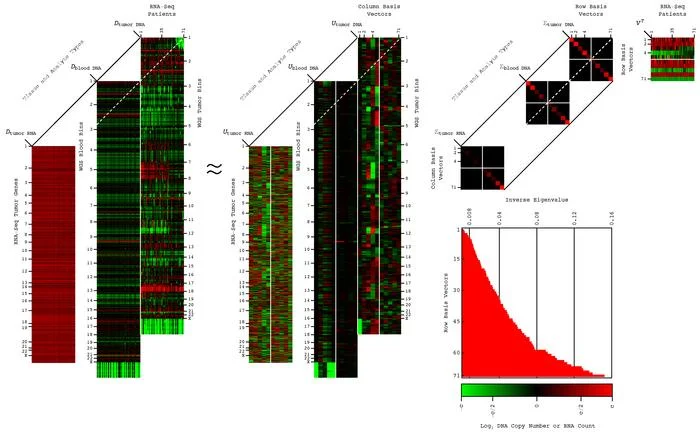
The approach, known as multitensor comparative spectral decomposition, combines information from several biological sources, including tumor DNA, tumor RNA and blood-based genetic data.
Researchers describe the process as similar to a prism separating white light into its component colors. The algorithm breaks complex biological data into interconnected patterns that can then be linked to treatment responses and patient outcomes.
One advantage of the method is that it remains interpretable. Unlike many neural-network systems, which often function as black boxes, the researchers say their approach can identify specific biological mechanisms associated with disease progression and treatment response.
Results in Neuroblastoma
To test the technique, the team analyzed publicly available neuroblastoma datasets.
The system identified two previously unknown predictors of patient survival and treatment response. According to the study, these predictors outperformed existing biomarkers when evaluated across tumor DNA, blood DNA and tumor RNA datasets.
The researchers said the findings were also reproduced in independent patient groups treated at different hospitals and during different periods, suggesting the results may generalize beyond a single dataset. Researchers say this could improve improve treatment selection and drug development by helping clinicians identify which patients are most likely to benefit from specific treatments.
Implications for Drug Development
The researchers stressed that the technology could be useful not only for selecting therapies but also for identifying new drug targets.
The team reported that related versions of the approach have already been used to predict treatment outcomes and potential therapeutic targets in glioblastoma, an aggressive form of brain cancer. Those predictions were subsequently tested using laboratory experiments and CRISPR gene-editing techniques.
According to the researchers, the approach could help drug developers identify which patients are most likely to benefit from a clinical trial and which genes may represent promising therapeutic targets.
“That’s the ultimate precision medicine,” Alter pointed out. “You have a single person. Can you take the data from just that one person and come up with a treatment for them? I think we can get there.”
That commercialization effort is already underway through Prism AI Therapeutics, a University of Utah spinoff company founded by Alter, the university noted.
Beyond healthcare, the researchers believe the underlying mathematics could be applied to other complex, data-rich fields where conventional AI struggles with limited sample sizes. Potential applications could include areas such as sustainable energy.
Funding
The research was supported by the National Institutes of Health, the National Cancer Institute, the National Science Foundation, the American Institute of Mathematics, the Musella Foundation, StacheStrong, Alex’s Lemonade Stand Foundation, the Rally Foundation and St. Baldrick’s Foundation.